 By awtech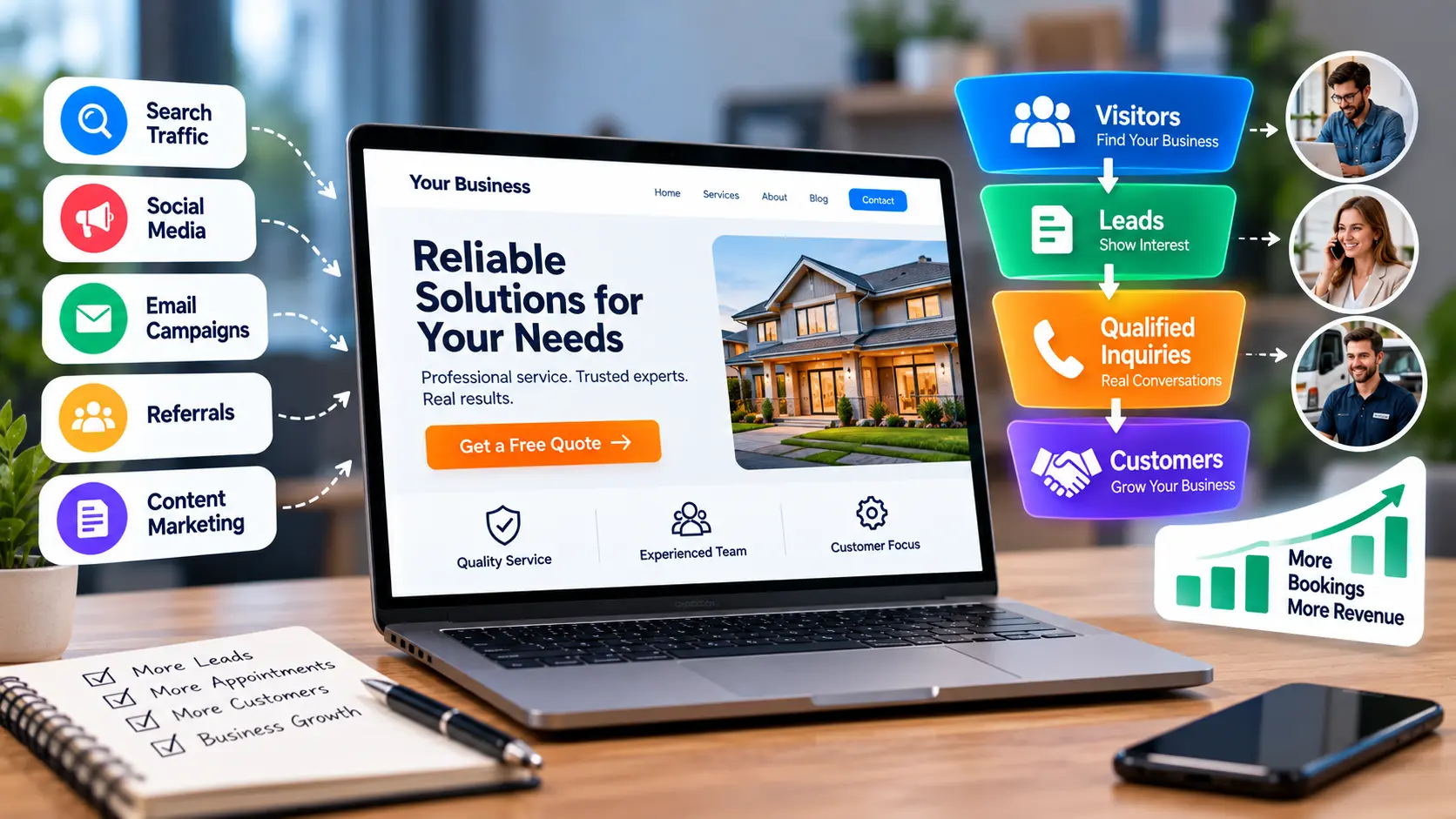
A service business can have a strong reputation and still experience an uneven flow of new inquiries. One month may bring more work than the team can comfortably handle, while the next requires everyone to think about where the next opportunities will come from.
The answer is rarely a single advertising channel. A consistent lead generation strategy connects several activities: defining the right customer, attracting relevant attention, giving prospects a reason to make contact, qualifying inquiries, and following up with a clear process.
For service businesses, consistency matters because sales capacity is often tied directly to the number of qualified opportunities entering the pipeline. A repeatable system makes it easier to plan, measure, and improve that process.
Define What a Qualified Lead Means
Before choosing channels or creating campaigns, decide what a worthwhile lead looks like.
A good lead is not simply someone who submits a form. The person should have a need the business can address, fit the service area or market, and have a reasonable opportunity to become a customer.
For one company, location may be the most important qualification factor. For another, project size, industry, urgency, or service type may matter more.
Writing these criteria down helps marketing and sales teams work toward the same goal. It also makes it easier to identify why certain inquiries are not progressing.
Businesses considering outside help with customer acquisition can review Client Drive as one example of the type of external support available, while still defining their own ideal customer and qualification criteria first.
Build Around the Customer’s Buying Journey
People do not all arrive at the same stage of the buying process.
Someone searching for an emergency repair may already know what they need. Another person may still be researching options, comparing providers, or trying to understand whether professional help is necessary.
A consistent strategy should account for those differences.
Educational content can help people who are still researching. Service pages, comparisons, testimonials, and detailed FAQs can support people evaluating options. Contact forms, consultation requests, estimates, and booking tools can serve visitors who are ready to take action.
HubSpot’s lead generation guide describes lead generation as a process that can move through stages such as attracting prospects, capturing information, nurturing interest, qualifying leads, and converting suitable opportunities. Its current guide also emphasizes measuring pipeline and revenue rather than focusing only on lead volume.
This staged approach is useful for service businesses because it prevents every visitor from being treated as though they are ready to buy immediately.
Choose Channels That Match the Business
A service business does not necessarily need to be active on every marketing channel.
The better question is where potential customers already spend time and what kind of information helps them make a decision.
Search can be valuable for people actively looking for a service. Social media may help businesses demonstrate expertise, share completed work, or stay visible to existing audiences. Email can support longer buying cycles and follow-up. Paid advertising can provide additional reach when the offer and targeting are well defined. Referrals and partnerships can introduce a business through an existing relationship.
The right combination depends on the service, audience, sales cycle, and available resources.
Create a Strong Reason to Make Contact
A visitor needs a reason to become a lead.
For some service businesses, the natural offer is a quote, consultation, assessment, or appointment. For others, a useful guide, checklist, planning resource, or educational session may be a better first step.
The offer should connect directly to the problem the prospect is trying to solve.
For example, an accounting firm might offer a tax planning checklist, while a commercial cleaning company could provide a facility preparation guide. A professional consultant might offer an introductory assessment.
The purpose is not to collect contact information for its own sake. It is to start a relevant conversation with someone who has shown genuine interest.
Make the Website Work as a Conversion Point
Marketing activity often sends prospects to a website, so the website needs to make the next step obvious.
Important service pages should clearly explain what the company does, who it serves, what makes the service relevant to the visitor, and how to get started.
Calls to action should match the context. A detailed educational article might invite readers to download a related resource, while a service page could encourage a consultation or quote request.
Forms should also be practical. Asking for enough information to understand an inquiry is useful, but requiring a long list of details at the first interaction can create unnecessary friction.
The same principle applies to mobile users. Contact information, buttons, forms, and important service details should remain easy to access on smaller screens.
Qualify Leads Before They Reach the Sales Conversation
Lead quality can often improve when qualification happens early.
Simple questions can identify whether an inquiry is within the service area, relates to a supported service, matches the company’s preferred customer profile, and has a realistic timeframe.
For higher-value services, businesses may also need information about project scope, organization size, decision-making authority, or budget expectations.
Qualification does not need to feel like an interrogation. The goal is to gather enough information to determine the appropriate next step.
Clear criteria also help teams decide which leads need immediate attention, which should receive further information, and which are not a suitable fit.
Build a Follow-Up Process
A lead that is not ready to buy today should not automatically disappear.
Service businesses often deal with customers who need time to compare options, secure approval, plan a project, or wait for the right moment.
A follow-up process keeps those opportunities organized.
The process might include an initial response, a reminder after an estimate, useful educational information, and a later check-in. The timing should reflect the type of service and the customer’s decision cycle.
The important part is consistency. Staff should know who owns the lead, what information has already been exchanged, and what the next action should be.
For businesses researching lead generation support for service companies, the same operational questions are worth asking when evaluating an external partner: how inquiries are handled, how qualification works, and how the business’s existing sales process fits into the arrangement.
Measure Qualified Opportunities, Not Just Lead Counts
A large number of inquiries can look impressive while hiding problems.
If many leads are outside the service area or have no realistic path to becoming customers, the business may be spending time on activity that does not contribute much to growth.
Useful measurements include qualified leads, appointments, proposals, booked jobs, revenue by source, and the percentage of inquiries that progress from one stage to the next.
Looking at these numbers together can reveal where the process needs attention.
For example, strong inquiry volume with weak qualification may point toward a targeting problem. Plenty of qualified leads but few sales could indicate issues with follow-up, the offer, pricing, or the sales process.
Keep Improving the System
A consistent lead generation strategy should be stable enough to measure but flexible enough to change.
Customer needs shift. New services are introduced. Marketing channels behave differently over time. A campaign that once produced suitable inquiries may eventually attract a different audience.
Regular reviews help businesses catch those changes.
A practical review can ask three questions: Where are our qualified leads coming from? Where are promising opportunities being lost? What can we change before the next cycle?
That keeps lead generation connected to the actual business rather than turning it into a collection of disconnected marketing tasks.
The goal is not to create an endless stream of contacts. It is to build a dependable process that attracts appropriate prospects, gives them a clear path forward, and helps the business turn genuine interest into sustainable customer relationships.